Mathematics
Explore the Mathematics page to find key resources and learning materials for the subject.
Vision and Mission
The Mathematics Department is committed to inspire a love of mathematics and its applications by creating a supportive community where Damaians can explore, discover, and innovate.
Mathematics Programmes:
We employ a tiered approach to instruction to ensure every student reaches their potential. The following table outlines our differentiated learning:
programmes
Programme Name | Target Level | Primary Objective |
|---|---|---|
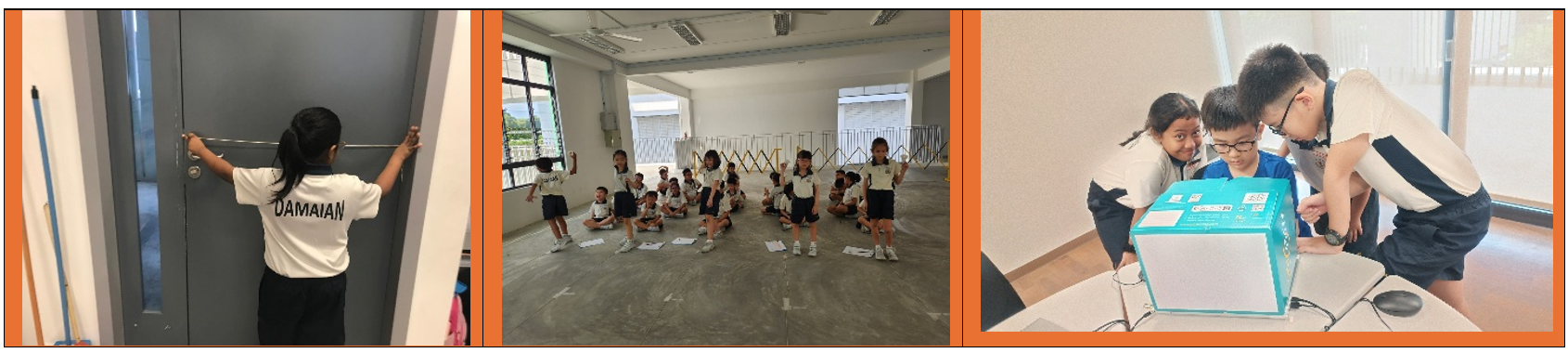
Mathematics Exploration Day | Primary 2 to Primary 6 | Through collaborative learning, students are given opportunities to solve puzzles and challenges. This is specifically designed to develop their e21CC skills like critical, adaptive, and inventive thinking skills. |
Learning Support in Mathematics (LSM) | Primary 2 to Primary 4 | Foundational numeracy supports early intervention for younger learners. |
Remedial Programmes | Primary 3 to Primary 5 | Targeted intervention and reinforcement for students requiring additional assistance. |
Supplementary Programmes | Primary 6 | Intensive curriculum support for graduating students sitting for national examinations. |
E2K Maths Programme | Primary 4 and Primary 5 | Specialized enrichment designed to foster mathematical inquiry and high-level reasoning. |
External Competitions and Excellence
To stretch our high-progress learners, selected students from Primary 4 to Primary 6 are invited to represent the school in the following external competitions:
• Raffles Mathematical Olympiad (RMO)
• National Mathematical Olympiad of Singapore (NMOS)
• Primary Mathematics Project Competition
Digital Learning and Student Engagement: Koobits
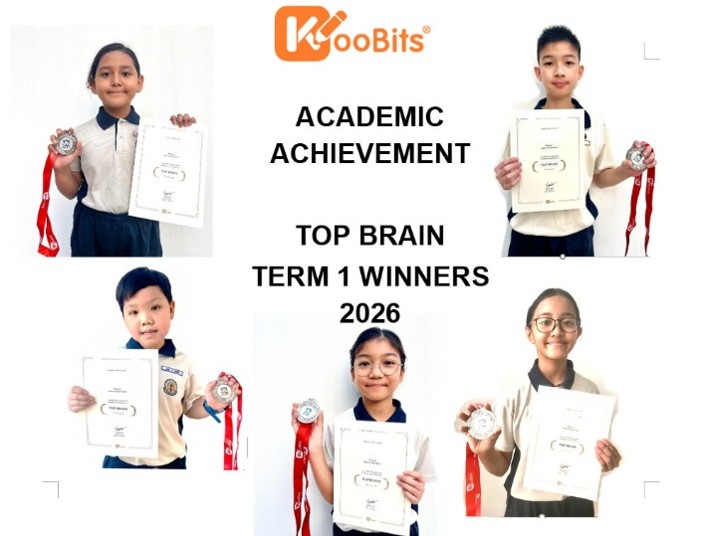
The department utilizes the Koobits e-portal as a cornerstone of our self-directed learning strategy. This platform allows students to master mathematical concepts at their own pace. To drive engagement and cultivate a daily learning habit, the school presents certificates and prizes to the "Champion Class" and "Top Brain" winners in each level.
Pedagogical Learning Methodologies
Our teaching philosophy is grounded in three primary methodologies that bridge the gap between abstract theory and practical application. By building a deep conceptual understanding and cultivating a positive mindset towards learning mathematics, we aim to prepare our students to be future-ready learners who enjoy learning and applying mathematics in authentic contexts.
- Experiential Learning
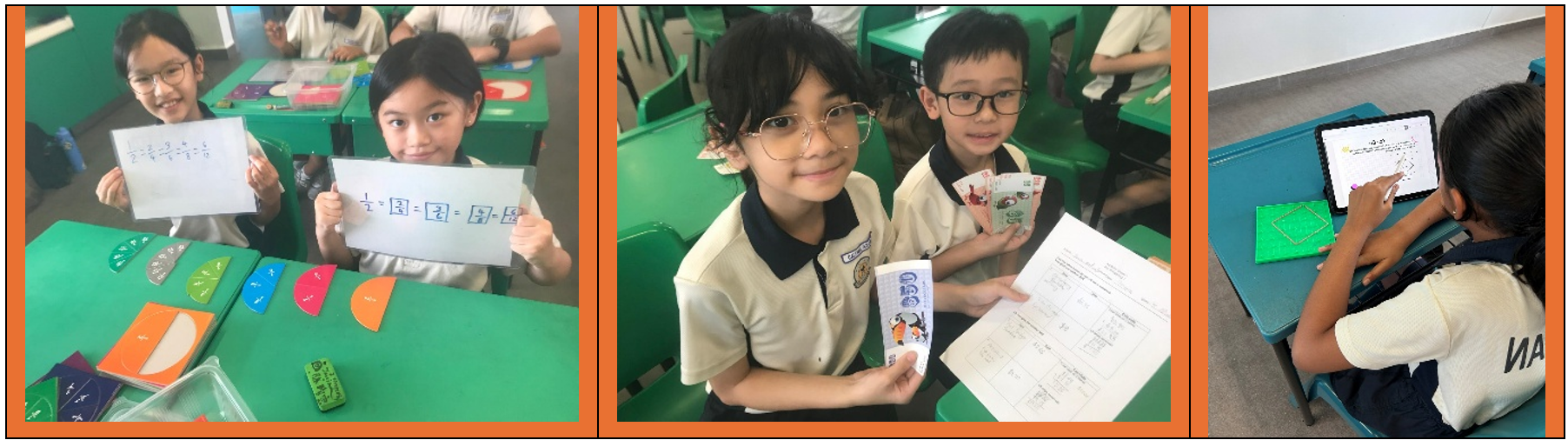
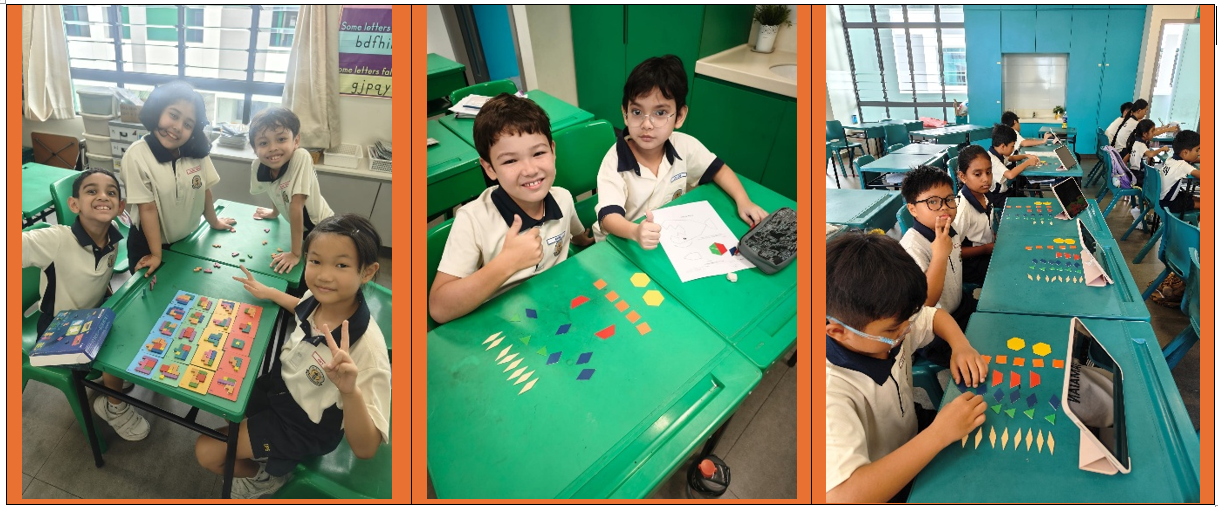
Students learn Mathematics in meaningful ways using manipulatives to construct their mathematical meaning. The use of physical and digital manipulatives helps students to visualize concepts better and the use of games engages and motivates students to apply concepts learnt.
- Collaborative Learning
Students are provided with structured opportunities to work together to solve puzzles and complex challenges. This approach is specifically designed to develop critical, adaptive, and inventive thinking skills.
- Inquiry-based Learning (IBL)
Students explain their reasoning, share diverse problem-solving methods, and actively question ideas through inquiry-based learning. Instead of relying on direct instruction, teachers act as facilitators presenting open-ended problem situations, asking guiding questions, and encouraging students to discover mathematical patterns on their own.